Fly Fishing Basics
Fly fishing knots that hold when it matters
Every lost fish story has a short suspect list, and the knot is on it more often than the tippet or the truth. Four knots cover an entire season; the craft is in tying them wet, seating them fully, and retieing them without being asked.
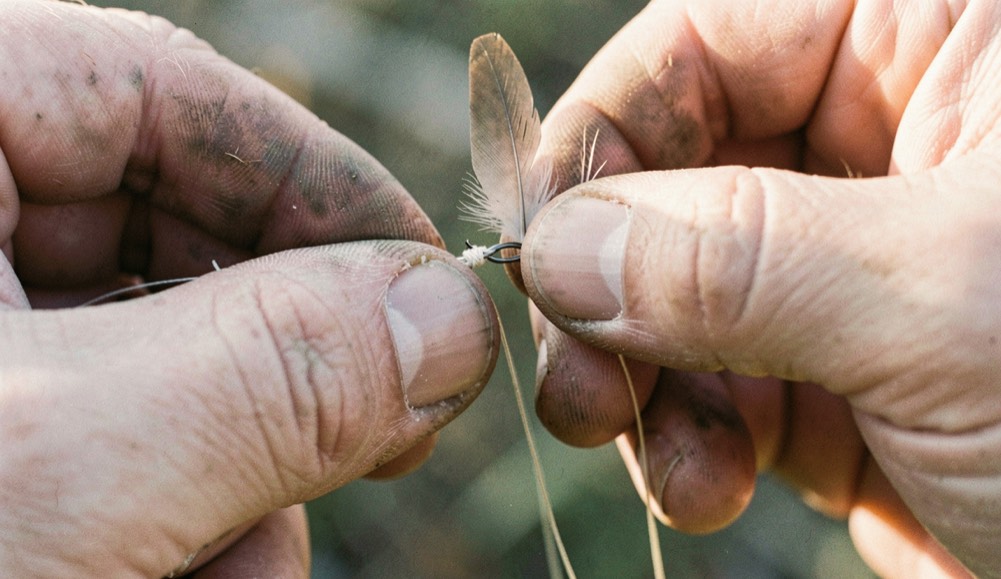
Every lost fish story has a suspect list of three: the knot, the tippet, or the truth. On most days the knot did it, and not because the angler chose badly but because the knot was tied dry, seated halfway, or asked to hold a fish it never got properly tested for. Four knots cover an entire season of fly fishing, and all four are easier than the lore around them. Learn them once, tie them wet, and retie them often; the rest of this page explains where each one belongs and why.
The improved clinch: the everyday connection
The improved clinch knot ties fly to tippet, it ties fast, and it holds well in the diameters most trout work asks for. Thread the tippet through the hook eye, make five to seven wraps around the standing line, pass the tag back through the gap near the eye, then through the large loop you just created, and cinch. That final pass through the big loop is the improvement: it keeps the wraps from spiraling open under load. Published line tests typically put a well-tied improved clinch at 85 to 95 percent of rated line strength, with the exact figure depending on tippet material and diameter.
Two habits decide whether your clinch performs at that band. Wet the knot before tightening so friction heat never scorches the nylon, and seat it with a slow, steady pull rather than a yank, watching the coils stack cleanly. A clinch tightened dry at speed is the most common weak knot on any river, and it fails at exactly the wrong fish.
Loop knots: when a fly needs freedom
Streamers and other swimming patterns behave better when they can pivot on the tippet instead of swinging stiffly behind it. The non-slip loop knot leaves a small open loop at the fly and typically retains about 90 percent of line strength, which is more than the old looping knots it replaced. Tie it by making a loose overhand knot well up the standing line, passing the tag through the hook eye and back through the overhand, wrapping a few turns, and snugging everything down while leaving the loop its working size.
The loop also appears where leader meets tippet: a small surgeon’s loop on each line end joined loop to loop makes midstream tippet changes fast and keeps the connection smooth through the rod guides. Keep the loops modest; a dinner-plate connection turns over like a dropped sandwich.
Tippet to tippet: blood knot and surgeon’s knot
Lengthening a leader or stepping tippet diameters down calls for a splice. The blood knot, five wraps per side, stays slim and passes through guides cleanly, and it typically tests around 90 percent when seated carefully. Its rival, the double surgeon’s knot, is bulkier, faster, and easier with cold fingers or wind, and in many tests it holds a slightly higher share of line strength. The honest rule: tie the blood knot at the tying bench the night before, and the surgeon’s knot on the bank when the fish are rising now.
| Knot | Job on the river | Typical strength retention | Watch for |
|---|---|---|---|
| Improved clinch | Fly to tippet for most dries and nymphs | 85 to 95 percent, tied wet and seated | Spirals open if the final loop pass is skipped |
| Non-slip loop | Streamers and patterns that should swim | About 90 percent | Snugging the loop shut kills the action |
| Blood knot | Tippet to tippet, leveling a leader | Around 90 percent | Miserable in wind or numb fingers |
| Double surgeon | Fast splices and dropper rigs | Among the strongest leader splices | Bulkier, and it can twist light tippets |
Treat every number in that table as a band, not a promise. Fluorocarbon and nylon test differently, thinner diameters lose more to sloppy seating, and one bad coil costs more than the choice between two good knots. The chart ranks habits, not brands.
The five minute knot drill
Run this before the first cast of any trip:
- Tie each of the four knots once, slowly, without rushing the seating.
- Pull every finished knot to a firm, steady test before it fishes.
- Check the fly connection after every landed fish and every snag.
- Retie when the tippet above the fly shows nicks, wind knots or a memory curl.
- Keep nippers and forceps in the same vest pocket every trip.
Mistakes that empty a fly box
The recurring errors are dull, which is why they repeat. Tying dry, so friction heat weakens the nylon at the exact point that meets the fish. Wrapping too few turns, three instead of five or more, and discovering it when the coil slides. Trimming tag ends flush before the knot is seated, then watching it unravel on the second cast. Skipping the test pull because the fish are rising. And retying never: a clinch that landed a dozen fish and survived two snags has spent most of its strength already, and the thirteenth fish is the one you will describe for years.
Which knot, in one paragraph
Here is the working decision. Dry fly or nymph on tippets of about 6X through 3X: improved clinch, five to seven wraps, tied wet. Streamer or anything that should move: non-slip loop. Joining tippet at the bench: blood knot; joining tippet on the bank: double surgeon’s. After any fish worth remembering: retie before the next cast. If you keep those four sentences, the knot column of the lost fish report goes quiet, and the catch and release best practices page becomes the only handling you need to think about.