Gear Checklists
A wading safety checklist for moving water
Moving water is the strongest thing in this sport and it does not negotiate. The rules are old and they all come from the same physics: water at knee depth pushes harder than you think, and cold water ends arguments in minutes. Run the checklist before every trip.
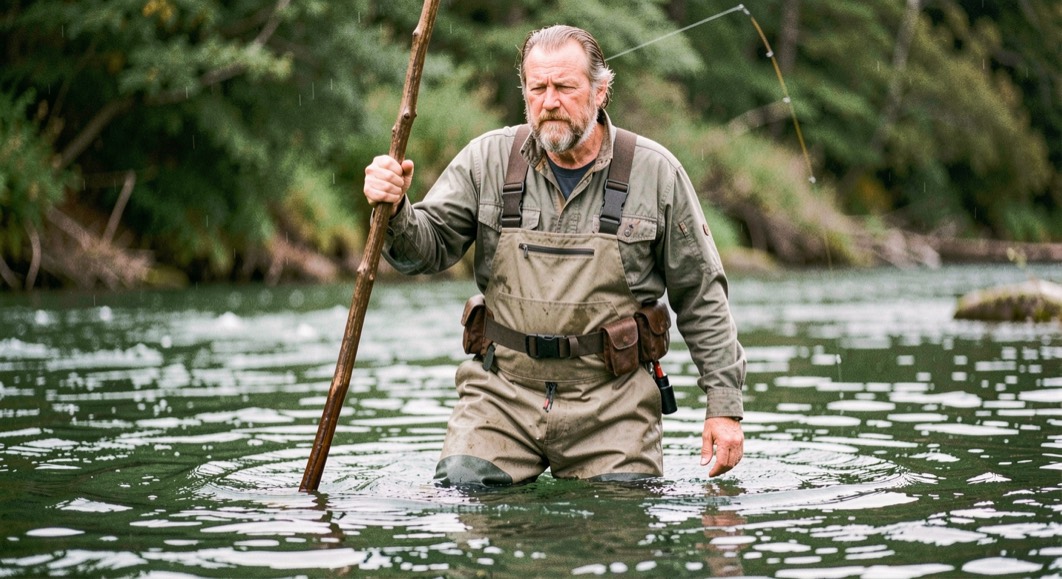
Wading safety is not a chapter for beginners; it is the price of admission every season, for every angler who steps past the bank. The physics are unforgiving and simple. Moving water pushes with more force than most people intuit, cold water robs the body faster than cold air by a wide margin, and a fall in current is rarely recoverable by swimming against it. The habits below are the ones river people actually run, arranged as a checklist with the reasons attached, because a rule you understand is a rule you keep.
What the water is actually doing to you
Two forces matter. Force rises steeply with speed and depth together: water at shin depth is pleasant, at knee depth it demands attention, at thigh depth it owns the conversation, and above that in any real current you are cargo. Cold is the silent one. Water pulls heat from the body many times faster than air at the same temperature, so a 50 degree day with a 45 degree river is a colder outing than the air suggests, and a swim in such water becomes an emergency in minutes, not hours. Both forces are on the table in every table below, and the season chart in the reading water reach, the temperature page, doubles as a comfort chart for exactly this reason.
| Condition | What it means | The response |
|---|---|---|
| Clear, steady, shin deep | Normal wading, full attention available | Standard habits: belt on, shuffle steps, staff optional |
| Off color, rising | Flow climbing, footing invisible | Shrink the plan, keep to shallow margins, watch the bank |
| Knee to thigh deep current | Force now meaningful | Staff in the downstream hand, angle across, never face directly downstream |
| Cold water below about 50 F | A swim turns serious in minutes | Shorten crossings, fish near exits, dry suit or layers, partner present |
| Tailwater below a dam | Releases change depth without local weather | Know the release schedule, note the gauge, exit at the first rise |
The gear that earns its place
Four items do the safety work. A wading belt, because it keeps waders from balloon filling and dragging you down, and it costs less than any fly in the box. Felt or modern rubber soled boots with studs where the rock is slick, chosen for the river, not the catalogue. A wading staff, which converts every crossing from a balance gamble into a three legged walk, carried in the downstream hand where it braces the current. And layers that keep working when wet, wool and synthetics, with a dry bag holding a change. A personal flotation device belongs on big water, deep tailwaters and any float where a swim ends far from the takeout; strong swimmers drown in moving water every year wearing nothing.
Crossing: the decision before the move
Every crossing is chosen before it is started. Pick the wide, shallow, slow tail of a riffle rather than the smooth looking deep run, because the flat tail is exactly where current spreads and weakens. Angle diagonally downstream, facing partly upstream, sidestepping with the staff planted, since the current then pushes you gently toward your line rather than off it. Unclip nothing mid river, and never carry a load that turns a stumble into a trap. The old rule holds: if the water at your thigh is moving fast enough to make you lean, turn around. The river will be lower, or you will be smarter, another day.
The wading checklist, run every trip
- Belt on, snug, before the first step, every trip without exception.
- Boots and studs checked; laces double knotted.
- Staff in hand or stowed within reach, not in the truck.
- Dam release schedule checked on tailwaters, river gauge noted.
- Exit points identified before entering: two, on opposite banks where possible.
- Partner or someone told where and when, on any remote or cold water day.
- Dry bag with a change of layers zipped shut in the vehicle.
Mistakes the river collects
The ledger is consistent. Wading deeper instead of smarter, since one step up doubles the force question. Facing downstream in a crossing, which invites the current to fold you. Fishing rising, off color water in the same spots as clear days, when the whole geometry has changed. Ignoring a dam schedule because the sky is clear, when releases obey a power dispatcher, not the weather. Wet wading cold water to save a change of clothes. And the newest habit gone wrong, heads down in a phone at the edge, which is how people now fall in before the fishing starts.
The rule behind all of it
Here is the decision rule the checklist serves: the fishing is never on the far side of a crossing you would not repeat four more times today. Plan the day so every crossing passes that test, teach it to whoever shares your water, and treat the knots page’s retie discipline as the same instinct applied to tackle. The river does not care about experience; the checklist does. That is why it exists, and why this page is the one in the gear reach to reread at the start of every season.