Fly Fishing Basics
Match the hatch: a first field guide
Trout key on size and silhouette before they argue about color. Matching the hatch is observation with a short shopping list, and it starts with knowing which of four insect groups is on the water.
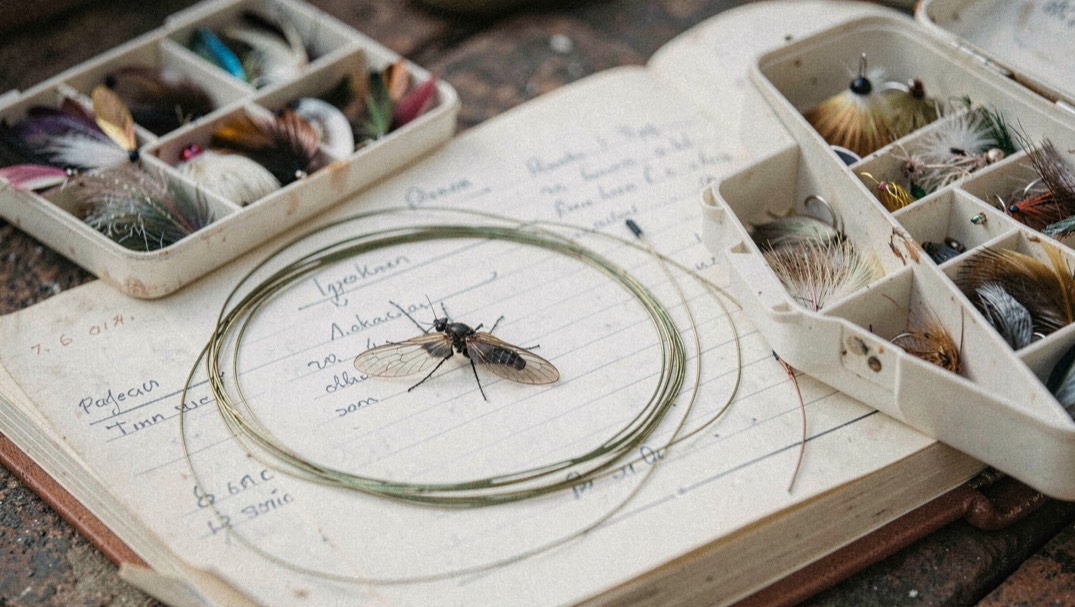
Match the hatch sounds like entomology homework, and on some rivers it becomes exactly that. On every river it begins as something simpler: a pause before the first cast to ask what is on the water, how big it is, and what stage of its life it is living. Trout do not read latin names. They read size, shape and posture, in that order, and an angler who answers those three questions is matching the hatch whether the fly in the box has a name or not.
What matching actually means
Three decisions happen in sequence. Size comes first and forgives nothing: a fly one size off still fools fish, a fly three sizes off feeds them at your expense. Silhouette comes second, meaning the general shape and stance on the water, a mayfly riding tall with upright wings versus a caddis skittering with folded tent wings. Shade comes last, and it matters least of all: pale versus dark beats an argument between two similar olives. Stage runs alongside all three, because a trout taking emergers just under the film will ignore perfect duns floating over its head all afternoon.
The four groups that cover most water
You do not need the whole taxonomy. Four insect groups explain the overwhelming majority of what trout eat from the surface and just beneath it across most North American trout water, and each group writes its own signature on the river.
| Group | Typical hook sizes | Where and when | On the water it looks like |
|---|---|---|---|
| Mayflies | 10 to 20 | Clean riffles and runs, spring through fall | Sailboat duns riding the film, upright wings |
| Caddis | 12 to 18 | Fast water, warm evenings, late spring into summer | Skittering, moths at dusk, splashy rises |
| Midges | 18 to 24 and smaller | Year round, slow water and tailwaters, winter mainstay | Tiny specks in slack water, gentle rings |
| Stoneflies | 6 to 12 | Rocky riffles, cold early season days | Big clumsy adults on banks and bushes |
A fifth group never hatches at all: terrestrials. Ants, beetles and hoppers blow or fall onto the water all summer, and on windy days along grassy banks they can outrun every aquatic hatch on the river. Sizes run roughly 8 to 16, and the take is rarely subtle.
Reading riseforms
The water reports the hatch before you see a single insect. Steady, dimpling rises in a slow lane usually mean duns or spinners being sipped in place, and they reward a careful, quiet approach. Splashy, fast rises scattered across a run fit caddis or fish chasing emergers, and a soft swing or a skipped fly earns more takes than a dead drift there. Bulges under the surface, a boil without a ring, mean the fish are eating just beneath, and switching from dun to emerger or soft hackle turns refusal into take. Rises hold a fixed station, so a rising trout is a fish with an address; that is the whole reason the reading river currents note matters as much as the fly box.
A first fly selection that travels
Carry a generalist for each group and refine later. A pheasant tail nymph covers mayflies below the surface, an Adams or any gray dun pattern in 14 and 16 covers the surface, an elk hair caddis covers the evening skitter, a Griffith’s gnat or small zebra midge handles the tiny stuff, and a stonefly nymph earns its box space on cold early rivers. That short list, in honest sizes, outfishes a wall of specialty patterns in the hands of anyone who watches the water first.
The pre hatch checklist
- Stand still for two full minutes and watch before rigging.
- Sweep a white cup or turn over two rocks: what crawls out is the menu.
- Match size first, silhouette second, shade last, and stage where the rises say.
- Start with the generalist pattern, then refine toward the natural.
- When three good drifts draw nothing, change stage before changing color.
Mistakes that keep flies floating and fish down
The classic errors all skip a step. Chasing an exact color match while fishing a size too big. Ignoring stage, casting duns over fish that are eating emergers. Fishing a beautiful hatch run when the rises sit in a different lane, which is a water reading miss dressed as an entomology miss. Drowning a dry fly with floatant sludge, then blaming the pattern. And the quiet one: refusing to go subsurface, as if nymphs were a confession. Trout eat underwater almost all day on most rivers, and the water temperature table explains why their mood changes hour to hour.
The working method, condensed
Watch, identify the group, match size and silhouette, choose the stage the riseforms vote for, then fish it with the knot craft from the knots page and correct drifts. If nothing comes in three honest passes through a lane, change stage, then change fly, then change lane, in that order. That decision sequence, not any single pattern, is what match the hatch actually teaches, and it is the first habit listed in the piece on what a fly fishing guide teaches for the same reason.