Hunting Seasons
A deer season preparation timeline that works
The hunters who fill tags in November started in the spring, and not because they work harder. They run a timeline. This one runs twelve months out to the post season, one block per season, nothing in it that a weekend cannot carry.
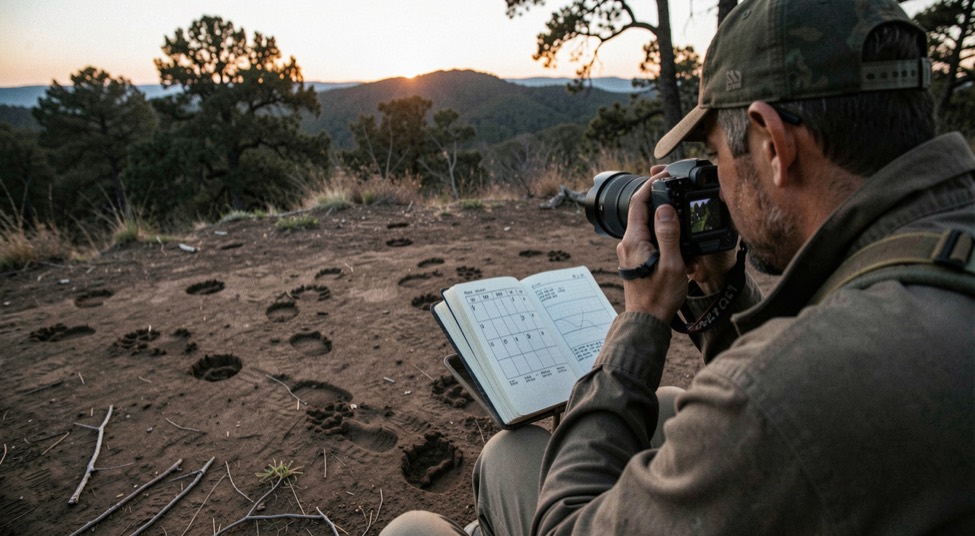
Deer season is won in the months nobody is hunting, which is easy to say and useless without a schedule. The timeline below runs one full year, twelve months out to the post season review, and every block is sized for a person with a job: one focused weekend per month does it. Skip a block and the season still arrives, but it arrives as an accident. Run it and opening day finds you standing in a place you chose on purpose, in a pattern you watched build for months.
Spring, twelve to six months out: paper and eyes
Spring is the administrative season. Draw applications for limited entry units close in this window across most states, so this is when the season calendar reading pays: apply on the framework’s clock, not in a panic. Then begin the light half of the work, glassing and shed hunting, which builds your map of where deer winter and where trails funnel between beds and food. Spring scouting burns no advantage, unlike fall scouting, because the pattern you see in April is not the pattern you will hunt in October; you are collecting terrain, not locations.
Summer, six to three months out: pattern and practice
By mid summer the pattern turns real. Trail cameras, run on a modest schedule and moved as evidence changes, tell you which bucks and does are alive and roughly when they move. Food sources firm up, agricultural fields draw hard in the evenings, and early velvet patterns sketch the skeleton you will refine in fall. Practice runs in parallel: sixty arrows a week beats three hundred the week before the opener, and if you hunt with a firearm, a confirmed zero plus a box of the exact ammunition you will carry is the whole assignment.
Fall, the last eight weeks: refine and finalize
The last stretch narrows everything. Cameras and boots confirm which summer pattern survived into fall, because some do and some dissolve when food shifts. Stand sites get trimmed to two or three, each with an entry route and a wind window, and each checked against the unit rules on any public ground. Gear gets walked, not shopped: boots worn in, pack settled, and every tag, license and stamp bought early, per the licenses page. Shooting practice turns short and honest, from realistic positions at realistic ranges, because that is the only practice that transfers.
| When | Focus | The one weekend job |
|---|---|---|
| 12 to 9 months out | Draws and winter range | Applications in, one shed hunt or glassing session |
| 9 to 6 months out | Terrain and access | Map the funnels, confirm access and boundaries |
| 6 to 3 months out | Pattern and practice | Cameras out, sixty arrows a week, confirmed zero |
| 8 to 2 weeks out | Refine | Trim stands to the two that survived the evidence |
| Opening week | Execute | Enter slow, hunt the wind, leave stands alone after |
| Post season | Write it down | Log sightings, wind and mistakes before memory fades |
When the plan meets a real life
Every timeline meets a stalled work week, a storm, a sick kid or a flooded bottom, and the timeline survives those weeks because it was built with slack. The rule is simple: when a block is missed, keep the order and compress the content, because a half sized camera check still beats a skipped one, and twenty arrows in a lunch hour still hold a form that three hundred in a panic will not. What the plan does not survive is reordering, the temptation to do the fun block first. Eyes before arrows, arrows before stands, stands before openers: the sequence is the whole discipline.
The opening week checklist
- Stand, steps or seat set, entry route walked in daylight once.
- Wind plan for every stand, and the discipline to skip a bad wind.
- License, tags and reporting app charged and packed the night before.
- Blaze orange to the state’s requirement, not to habit.
- Headlamp, knife, gloves and a plan for the deer after the shot.
Mistakes the timeline exists to prevent
The big four repeat every season. Scouting too close to the opener, which teaches the woods your schedule and burns the very stands you found. Trusting a summer pattern into fall without rechecking it. Practicing long and hunting short, meaning range bench accuracy that never survives a real stance. And the administrative misses, a lapsed draw, an unbought tag, a missed reporting deadline, all of which the seasons calendar guide and the licenses page exist to retire. None of these are skill failures; they are calendar failures, and calendars can be fixed tonight.
The decision point each spring
Once a year, usually while the draws open, run an honest review of last season’s notes and choose the year’s plan: which unit, which weapon windows, which two stands to develop. That single sitting is the whole secret. Everything the timeline asks for afterward is execution of a decision already made, and if the plan involves new ground or new gear, the gear checklists reach and the season calendar page carry their halves. Deer season preparation is not a personality trait; it is a calendar with six weekends on it, and it starts whenever you say it does.